



Mazda CX-90 PHEV Electric Range Explained
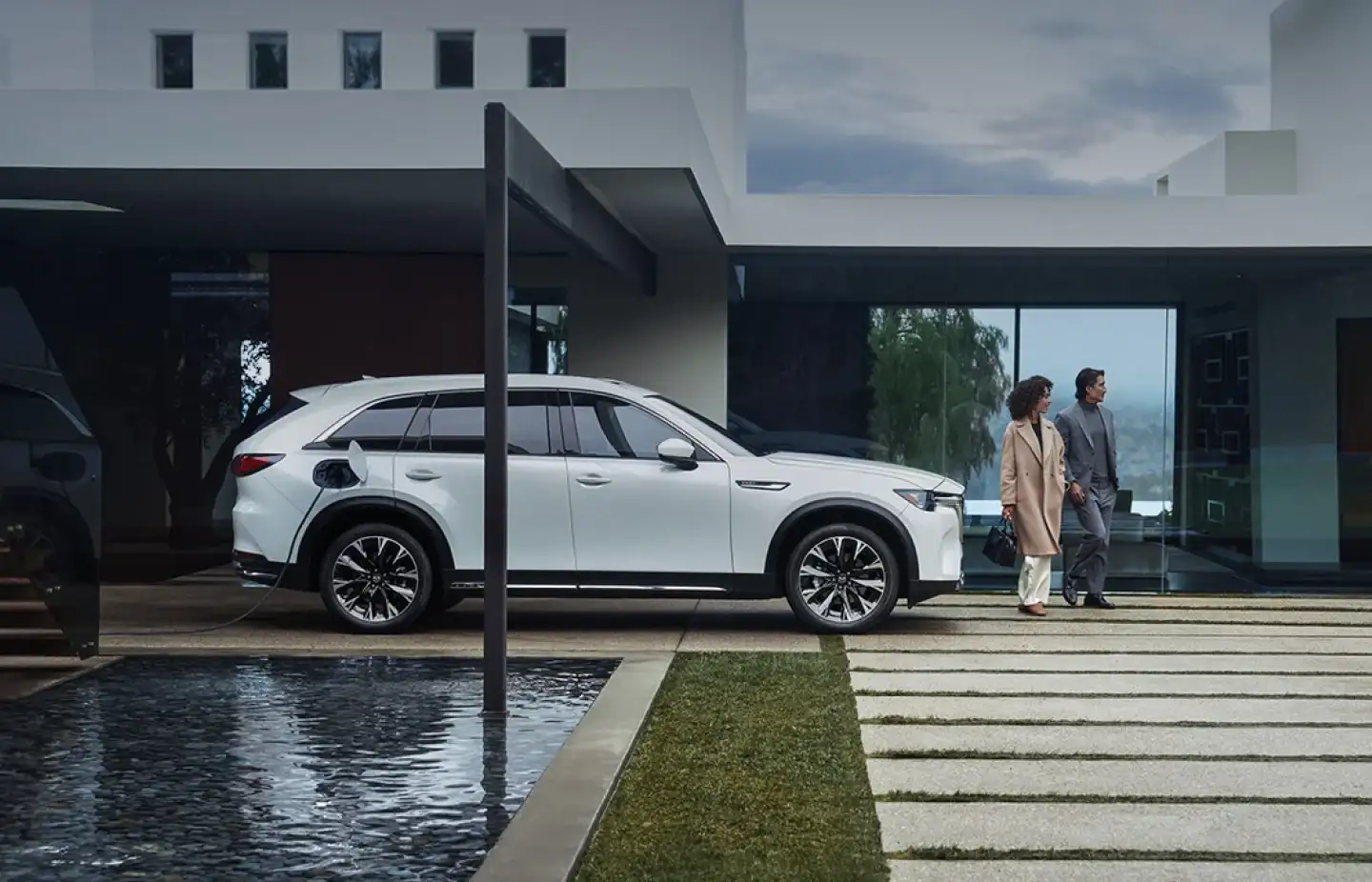
The Mazda CX-90 PHEV electric range is EPA-estimated at 26 miles on a full charge. That number can cover many school runs, errands, and short commutes without using gasoline, but the better question is whether it fits the way your household actually drives. For Northern New Mexico families, elevation changes, winter temperatures, highway stretches, and charging access all shape the real-world answer.
The CX-90 PHEV is not meant to function like a long-range battery-electric SUV. It is a three-row plug-in hybrid that pairs everyday electric driving with a gas engine for longer trips. Charge it regularly, and it can reduce fuel use for local driving. Skip charging for several days, and it still operates as a capable hybrid vehicle rather than leaving you dependent on a public charger.
What Is the Mazda CX-90 PHEV Electric Range?
The CX-90 PHEV has an EPA-estimated 26 miles of all-electric range and an EPA-estimated 56 MPGe combined rating when operating with electric charge available. It uses a 17.8-kWh battery, an electric motor, and a 2.5-liter four-cylinder engine. Together, the system delivers up to 323 horsepower when using recommended premium fuel.
That 26-mile estimate is best viewed as a consistent benchmark, not a promise that every drive will produce the same result. EPA testing creates a useful comparison between vehicles, but no rating can account for the climb out of town, a cold morning near the Sangre de Cristo Mountains, or a fully loaded family trip.
For a driver with a 10- to 20-mile round-trip commute and dependable home charging, the electric range may cover most weekday driving. A driver traveling 40 miles each way will use both electricity and gasoline on a typical commute, but can still benefit from starting every day with a full battery.
Why Real-World Range Can Be Different
Electric range changes with conditions. This is true of every plug-in hybrid and EV, but it deserves special attention in Northern New Mexico, where weather and terrain can vary substantially in one drive.
Cold weather is one of the largest factors. Battery efficiency naturally falls in lower temperatures, and heating the cabin uses energy. Expect electric range to be lower during winter than on mild spring or fall days, particularly if the vehicle sits outside overnight.
Elevation also matters. Driving uphill requires more energy, so a climb may reduce the available electric miles faster than a flat route. On the return trip, regenerative braking can recover some energy during deceleration and downhill driving. It helps, but it does not completely erase the energy used on the ascent.
Speed, passenger load, cargo, tire pressure, wind, and climate-control use play a role as well. A gentle in-town route often favors electric driving. Sustained highway speeds, strong crosswinds, or a full cabin with luggage typically use more energy. The key is to consider the range against your normal route instead of treating 26 miles as an all-or-nothing target.
A practical way to plan around 26 miles
If your typical daily driving is below the EPA estimate, the CX-90 PHEV can often handle it primarily on electricity when charged nightly. If your daily route is somewhat longer, it can still make sense because the first portion of the trip can be electric before the gas engine takes over.
For longer drives to Albuquerque, Taos, or beyond, the PHEV system removes the range-planning pressure associated with a battery-electric vehicle. Once battery charge is reduced, the gas engine helps keep the trip moving. You do not need to locate a charger before you can continue your drive.
Charging the CX-90 PHEV at Home
Home charging is what makes a plug-in hybrid most useful. The CX-90 PHEV can be charged with a standard 120-volt household outlet, commonly called Level 1 charging. This is a convenient option for drivers with plenty of time between trips, though it is the slower approach.
A 240-volt Level 2 charger is the more practical choice for many owners. Mazda estimates that Level 2 charging can take the battery from 20% to 80% in about 1.5 hours, while Level 1 charging takes considerably longer. Actual times can vary with the electrical supply and charging equipment.
For many households, the simplest routine is to plug in after arriving home and begin the next morning with a full battery. You do not need public charging to own a CX-90 PHEV, although it can be useful when available. Before buying, consider where the vehicle will park, whether you have access to an outlet or 240-volt circuit, and whether your daily schedule allows enough time to recharge.
Does the CX-90 PHEV use a fast charger?
The CX-90 PHEV is designed for Level 1 and Level 2 AC charging rather than DC fast charging. That is a reasonable trade-off for a plug-in hybrid with a modest battery intended for overnight or workplace charging. It means home charging convenience matters more than planning around fast-charging stations.
Is the CX-90 PHEV a Good Fit for Your Family?
The right answer depends less on whether 26 miles sounds impressive and more on whether those miles replace driving you already do. The PHEV can be especially appealing for families who want three rows, flexible gasoline backup for road trips, and a chance to drive locally on electricity.
It may be a strong match if you have regular charging at home, make frequent short trips, and prefer not to rely entirely on public charging infrastructure. It also fits shoppers who want a more premium driving experience than many larger family SUVs offer. Mazda engineered the CX-90 around a rear-biased all-wheel-drive platform, and the PHEV’s immediate electric torque can make around-town acceleration feel responsive.
There are trade-offs. The battery and electrified hardware add complexity compared with a conventional gas-powered SUV. Drivers without reliable charging may not capture the full benefit of choosing a plug-in hybrid. If your driving is mostly long highway trips and you rarely plug in, a conventional hybrid or gas model may be the more straightforward choice.
The CX-90 PHEV also deserves a close look if you need three-row flexibility. Seating configuration, cargo needs, child-seat use, and the number of adults who regularly ride along can matter as much as electric range. A test drive should include time in every row, not just a quick trip around the block.
How to Get More From the Electric Range
A few habits can help the CX-90 PHEV make better use of its battery. Charge consistently rather than only before special trips. Use scheduled charging if it works with your utility plan, and consider preconditioning the cabin while the vehicle is plugged in when temperatures are extreme. That can reduce the battery energy needed to heat or cool the cabin after departure.
Smooth acceleration, sensible highway speeds, and properly inflated tires also support efficient driving. On mountain routes, use the vehicle’s energy-management features thoughtfully and allow regenerative braking to do its job on descents. Avoid judging the vehicle after one unusually cold day or one steep drive. Look at a full week of driving to see how it performs in your routine.
Questions Shoppers Commonly Ask
Can the CX-90 PHEV go farther than 26 miles?
Yes, it can under favorable conditions such as mild weather, moderate speeds, flatter roads, and light climate-control use. It can also fall below 26 miles in cold weather, on steep routes, or at sustained highway speeds. The EPA estimate remains the best standardized comparison point.
What happens when the electric range runs out?
The CX-90 PHEV continues driving with assistance from its gasoline engine and hybrid system. You can complete longer journeys without stopping to charge, which is one of the central advantages of a plug-in hybrid.
Do I need to install a Level 2 charger?
No. A standard household outlet can charge the vehicle, but a Level 2 charger makes it much easier to replenish the battery between daily trips. The best option depends on your parking setup and how often you drive.
A plug-in hybrid works best when it matches your real routine, not an idealized one. If you would like to compare the CX-90 PHEV with other Mazda SUVs, experience its three-row layout, or talk through home-charging considerations, the team at Santa Fe Mazda can help you choose with clarity and no guesswork.
Frequently Asked Questions
How much does a Santa Fe winter reduce CX-90 PHEV electric range?
The drop varies with temperature, cabin heat use, speed, and terrain, so there is no single number. Cold nights in Santa Fe and Los Alamos will usually mean fewer electric miles than on mild days. Parking in a garage, preconditioning the cabin while plugged in, and using seat heaters can help preserve range.
Can I charge a CX-90 PHEV at public chargers around Santa Fe?
Yes, it can use public Level 2 AC chargers, which are found at some workplaces, hotels, and shopping areas. It is not designed for DC fast charging. The Department of Energy station locator lists public chargers across northern New Mexico, but most owners rely on charging at home overnight.
Does high altitude affect the CX-90 PHEV?
Thin air reduces the power a gasoline engine can make, but the electric motor does not depend on air intake, so electric assistance stays available at Santa Fe’s elevation. Climbing grades still uses more battery energy, so expect fewer electric miles on routes that climb toward the mountains.
Does the CX-90 PHEV need different maintenance than a gas CX-90?
It still has a gasoline engine that needs routine maintenance, plus a high-voltage battery and charging system that technicians should inspect according to Mazda’s schedule. Your owner’s manual lists the intervals. Having service done by Mazda-trained technicians helps make sure the hybrid components are checked correctly.
0 comment(s) so far on Mazda CX-90 PHEV Electric Range Explained