



Mazda CX-50 Off Road Capability Explained
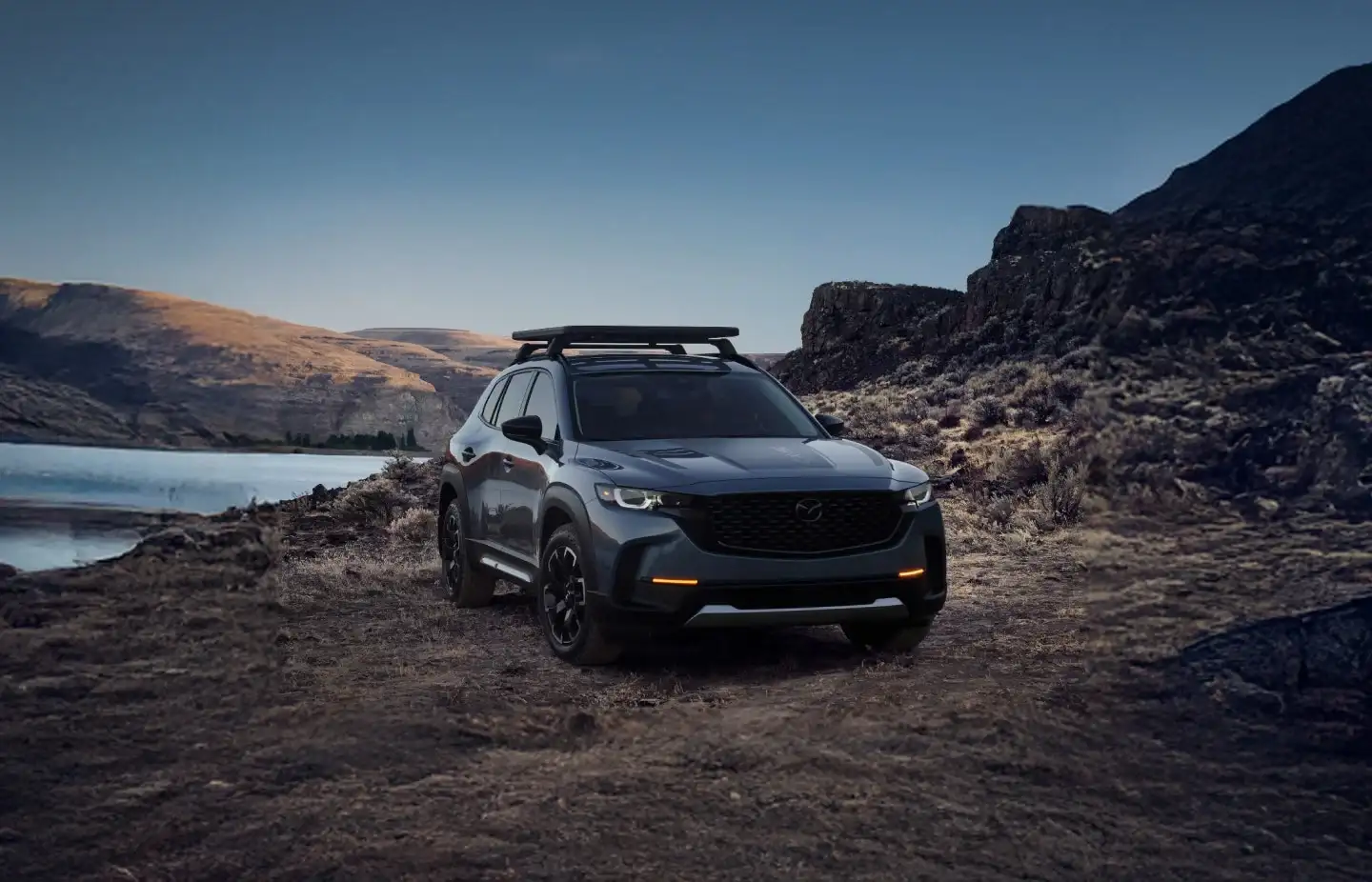
A washboard road outside Santa Fe can reveal more about an SUV than a smooth commute ever will. The Mazda CX-50 off road capability is designed for the kind of real-world adventure many Northern New Mexico drivers actually take: gravel approaches, uneven forest roads, muddy trailheads, snow-covered streets, and the occasional rutted access road. It is not a purpose-built rock crawler, and Mazda does not position it as one. What it offers is a refined compact SUV that feels composed when pavement ends.
What Makes the CX-50 Ready for Unpaved Roads?
Every Mazda CX-50 comes with all-wheel drive, and gas models use i-Activ AWD, Mazda’s predictive all-wheel-drive system. Rather than waiting for a wheel to spin dramatically before responding, it continuously monitors driving conditions and helps direct power where traction is most useful. That matters on loose gravel, rain-slick pavement, packed snow, and changing elevations where a road surface can shift quickly.
The CX-50 also has generous ground clearance for its class – from 8.3 to 8.6 inches depending on trim. That extra space helps drivers clear shallow ruts, uneven two-track roads, and smaller rocks without the constant concern of scraping underneath the vehicle. Its wide stance and body design give it a planted feel, while the suspension is tuned to absorb rougher surfaces without making the daily drive feel disconnected.
Mazda Mi-Drive adds another layer of control. Available drive modes include an Off-Road mode designed to help manage traction on lower-grip surfaces. Depending on the powertrain, drivers may also have Sport and Towing modes. The point is not to turn the CX-50 into a trail rig. It is to make the vehicle more capable and predictable when conditions call for a different response.
Mazda CX-50 Off Road Capability: Where It Shines
The CX-50 is at its best on maintained dirt roads, graded forest roads, gravel routes, snowy drives, and trailhead access roads. For a driver heading toward a campsite, a fishing spot, or a hiking destination, that covers a great deal of useful territory.
On washboard surfaces, the vehicle’s chassis tuning helps it feel settled rather than nervous. On gravel, i-Activ AWD and the CX-50’s balanced steering give the driver a clearer sense of what the front tires are doing. On snow or mud, Off-Road mode can help the vehicle maintain forward progress when one or more wheels encounter a less secure surface.
This is also where the CX-50’s on-road manners matter. Many SUVs can handle a rough access road, but then feel vague or cumbersome during the rest of the week. Mazda built the CX-50 for shoppers who want to drive to work, run errands, carry family gear, and take a weekend trip without choosing between road comfort and light-duty trail capability.
For Northern New Mexico conditions, that balance is practical. A route may begin on dry pavement, turn into loose dirt, pass through standing water after a storm, and finish in colder high-elevation weather. The CX-50 gives drivers useful confidence across those transitions.
Tire Choice Changes the Experience
Tires have a major effect on off-road performance, regardless of the vehicle. Some CX-50 trims are available with all-terrain tires that provide added grip and sidewall protection on loose or uneven surfaces. They can be a smart choice for frequent trailhead use, dirt-road travel, or snowy winter conditions.
There is a trade-off. All-terrain tires can create more road noise and may affect efficiency or the crisp, quiet highway feel that many drivers enjoy. If most of your driving happens on pavement and your unpaved travel is occasional, a standard all-season tire may be the better fit. A Mazda specialist can help match the trim and tire setup to how you genuinely drive.
How the CX-50 Compares With a Traditional Off-Road SUV
The CX-50 is a unibody crossover, not a body-on-frame 4×4 with low-range gearing. That distinction is worth understanding before you shop.
A traditional off-road SUV is built for more severe terrain: deep mud, large rocks, steep breakover angles, and remote trails where recovery equipment may be necessary. Those vehicles can have greater suspension articulation, more aggressive tires, underbody protection, and specialized four-wheel-drive hardware. They also often give up some everyday ride comfort, handling precision, and fuel efficiency.
The CX-50 takes a different approach. Its capability is aimed at the roads and conditions that most active drivers encounter regularly. It can handle imperfect terrain while remaining easy to park, comfortable for passengers, and engaging on a winding paved road. For many households, that is the more useful definition of adventure-ready.
If your trips routinely involve deep ruts, boulder-strewn routes, water crossings, or trails that require a high-clearance 4×4, the CX-50 is not the right tool. If your weekends include ski-area drives, dispersed-camping access, dirt roads, and outdoor destinations reached by maintained trails, it deserves serious consideration.
Turbo, Standard, or Hybrid: Does the Powertrain Matter?
The CX-50 is offered with different powertrain options, and each can fit a different kind of driver. The standard engine is well suited to daily commuting and everyday outdoor travel, while the available turbocharged engine brings stronger passing power and added confidence when the vehicle is loaded with passengers, gear, or a trailer.
For drivers who tow, the turbo CX-50 offers the strongest towing capability in the lineup when properly equipped. Towing mode helps the vehicle account for the added load, though safe towing still depends on trailer weight, cargo distribution, hitch equipment, and driving conditions. Off pavement, a heavier trailer changes stopping distances and reduces clearance, so it pays to choose conservative routes.
The CX-50 Hybrid is worth a look for shoppers who want improved fuel efficiency without leaving the compact SUV format. Its driving character and capability profile are different from the turbo model, so the best choice depends on whether your priority is frequent highway travel, everyday efficiency, towing, or stronger acceleration at elevation.
Smart Techniques for Driving the CX-50 Off Pavement
Capability is only one part of safe off-pavement travel. The driver’s approach matters just as much. Keep speeds low enough to spot ruts, rocks, and washouts before reaching them. Smooth steering, braking, and throttle inputs give the AWD system the best chance to manage traction effectively.
Avoid driving through water when you cannot judge its depth or the condition of the surface underneath. Be especially cautious after heavy rain, when dirt roads can develop hidden soft spots and erosion channels. In winter, remember that AWD helps the vehicle move forward but does not shorten braking distances on ice.
It also helps to prepare before leaving pavement. Check weather and road conditions, carry water and warm layers, keep your phone charged, and let someone know your route when traveling into remote areas. Respect posted closures and stay on designated roads. A capable SUV should make outdoor access easier, not encourage unnecessary risk.
Is the Mazda CX-50 the Right Adventure SUV for You?
Choose the CX-50 if you want an SUV that is comfortable in town, composed on the highway, and prepared for the imperfect roads that lead to the places you want to go. Its standard AWD, useful ground clearance, available Off-Road mode, and available all-terrain tires make it more than a styling exercise.
The decision comes down to your definition of off-road. For maintained unpaved roads, changing weather, light trails, and outdoor weekends, the CX-50 provides meaningful capability without compromising the quality and control expected from a Mazda. For highly technical terrain, look to a more specialized vehicle instead.
The best next step is to experience the CX-50 from the driver’s seat. Compare the available powertrains, ask about tire and towing configurations, and browse current new or Mazda Certified Pre-Owned inventory at Santa Fe Mazda. Buying a vehicle should feel as good as driving one – especially when the road ahead is not perfectly paved.
Frequently Asked Questions
Can the CX-50 handle forest roads in the Santa Fe National Forest?
On maintained forest roads and graded dirt routes, the CX-50 is a good fit thanks to standard all-wheel drive and its Off-Road mode. Rougher, high-clearance routes are another matter. Check the forest’s Motor Vehicle Use Maps and current conditions before you go, especially after monsoon storms or snowmelt.
Is the CX-50 good in snow on the way to the ski areas near Santa Fe?
Standard all-wheel drive helps the CX-50 pull away and climb on snowy roads, but stopping and steering grip come from the tires. For regular winter trips into the Sangre de Cristo mountains, consider winter tires or all-terrain tires rated for snow, and leave extra following distance on icy stretches.
Can I put all-terrain tires on a CX-50 I already own?
In many cases, yes, as long as the size and load rating match Mazda’s specifications for your vehicle. All-terrain tires add grip on dirt and gravel but can increase road noise. Santa Fe Mazda’s service team can help you compare options based on how much of your driving is on pavement.
Should I choose a CX-50 or CX-5 for northern New Mexico dirt roads?
Both come with all-wheel drive, but the CX-50 was designed with more outdoor use in mind, with a lower, more rugged design, an Off-Road drive mode, and available all-terrain tires. The CX-5 suits drivers who mostly stay on pavement and want a quieter, more traditional ride. Driving both on the same day makes the difference clear.
0 comment(s) so far on Mazda CX-50 Off Road Capability Explained